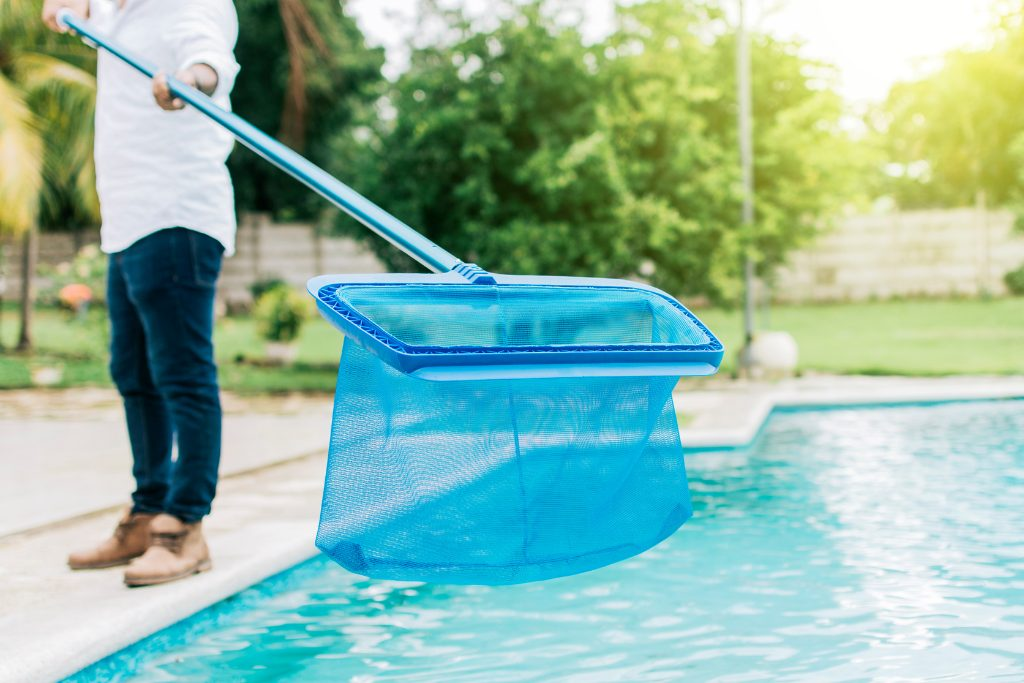
How to Identify, Treat, and Prevent Algae in Your Swimming Pool
Algae is the most common problem pool owners face.
What starts as a few specks can turn an entire pool green within hours.
Understanding why algae grows and how to deal with it saves time, money, and frustration.
This article covers the causes, types, treatment steps, and prevention methods based on proven water chemistry principles.
What Causes Algae to Grow
Algae spores are always present in and around swimming pools. They enter through wind, rain, leaves, soil, and even swimsuits. Under normal conditions, a properly maintained sanitizer level keeps these spores from multiplying. When conditions shift, algae can bloom rapidly.
Several factors contribute to algae growth.
Low or inconsistent free chlorine levels allow spores to survive and reproduce.
High pH reduces chlorine’s effectiveness, making it unable to kill algae efficiently.
Poor water circulation creates dead spots where algae can settle and multiply.
Warm water temperatures and sunlight accelerate photosynthesis, giving algae the energy it needs to grow.
Organic debris such as leaves, pollen, and grass clippings provide nutrients like phosphates and nitrates that feed algae.
A combination of these factors can turn a clear pool green in a matter of hours, especially during hot summer months.
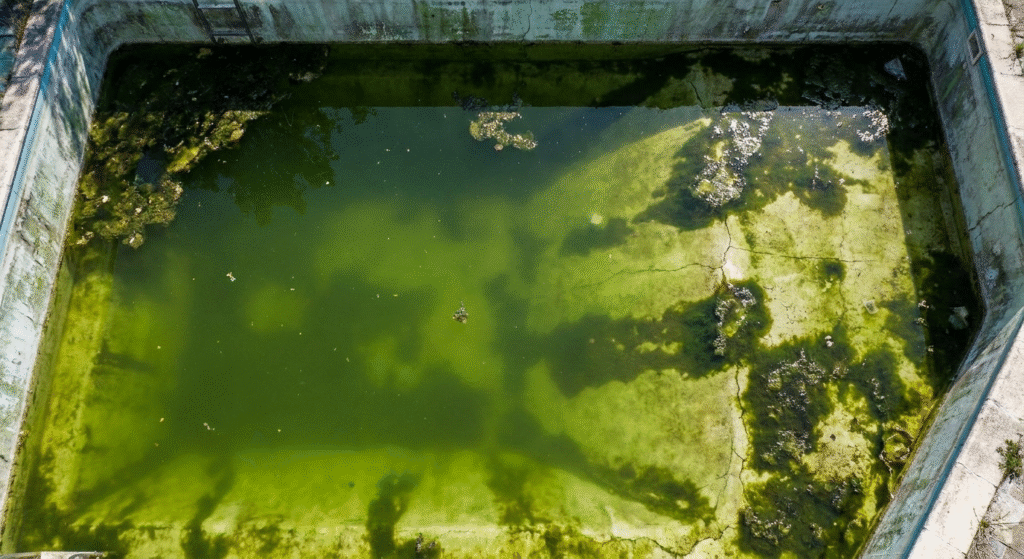
The Three Main Types of Pool Algae
Pool algae are typically classified by color, as this determines the correct treatment approach.
Green algae is the most common type.
It can float freely in the water, turning it a hazy green, or cling to walls and floors in patches. It ranges from blue-green to yellow-green.
Green algae is the easiest to eliminate but also the fastest to return if sanitation lapses.
Black algae appears as dark blue-green or black spots, usually on concrete or plaster surfaces.
It forms a thick protective slime layer and can root into porous surfaces.
Black algae is highly resistant to normal chlorine levels and requires aggressive physical brushing to break its coating.
Mustard algae looks like yellow or brownish powder, often mistaken for dirt or sand. It tends to grow in shaded areas and is more chlorine-resistant than green algae. It can survive on pool accessories and return if those items are not cleaned.
Step-by-Step Treatment for Algae
Treating algae requires a systematic approach. Skipping steps or adding chemicals without testing usually prolongs the problem.
Step 1: Test and Balance Water Chemistry
Before adding any treatment chemicals, test the water. Adjust pH to between 7.2 and 7.4. Lower pH ensures chlorine works effectively. Check total alkalinity and adjust to 80–120 ppm.
If cyanuric acid (stabilizer) is high, chlorine may not be able to kill algae even if it reads an acceptable level. Backwash or clean the filter before starting treatment.
Step 2: Brush All Pool Surfaces
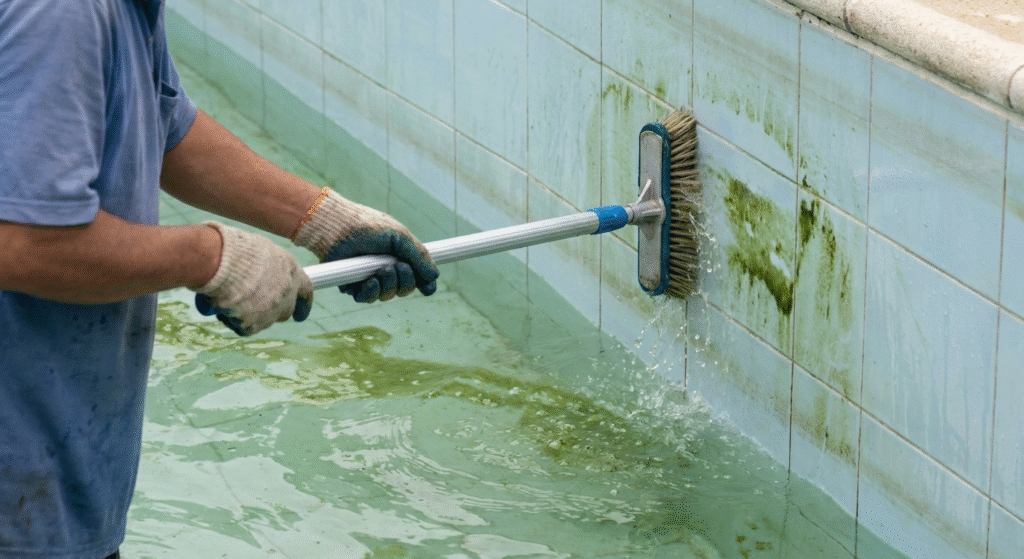
Brush the walls, floor, steps, and corners aggressively. This breaks the algae’s biofilm so chlorine can penetrate. For black algae, use a stiff wire brush on concrete or plaster. For vinyl or fiberglass, use a soft nylon brush to avoid damage.
Step 3: Shock the Pool
Raise the free chlorine level to a high enough concentration to kill the algae. The exact dose depends on pool volume and severity.
Typically, a light green bloom requires a standard shock dose, while severe or resistant types need repeated treatments. Apply shock in the evening to avoid sunlight degradation. Run the pump continuously.
Step 4: Add Algaecide
After shocking, add a quality algaecide. For green algae, a polyquat algaecide works well.
For black or mustard algae, use a product specifically labeled for resistant types.
Do not add algaecide when chlorine levels are extremely high; wait until they drop below 5 ppm if the label advises.
Step 5: Filter Continuously and Backwash Often
Run the pump 24 hours a day until the water clears. Dead algae particles will quickly load the filter.
Backwash when pressure rises 8–10 psi above the clean baseline.
For sand filters, a clarifier can help capture fine particles. For cartridge filters, clean the cartridges frequently.
Step 6: Repeat Brushing and Shocking if Needed
Brush again after 12–24 hours to dislodge dead algae. Most green algae blooms clear within 2–5 days. Black algae may take a week or more of persistent brushing and repeated shock doses. If progress stalls, consider consulting a professional.
How to Prevent Algae from Returning
Prevention is far easier and cheaper than treatment. Consistent maintenance keeps algae from gaining a foothold.
Maintain free chlorine levels between 2–4 ppm, adjusted according to your stabilizer level.
Test water daily or every other day during peak season.
Run the pump long enough to achieve at least one full turnover of water each day. In hot weather, longer run times may be necessary.
Balance pH between 7.4 and 7.6 to keep chlorine effective. Remove phosphates with a phosphate remover if tests show levels above zero. Phosphates are a primary food source for algae. Use a maintenance dose of algaecide weekly as an extra layer of protection.
Periodically inspect and clean the filter, skimmer baskets, and pump strainer. Pay attention to shaded areas, steps, and behind ladders where algae often starts. Keep pool covers clean and avoid contaminating the water with dirty swimwear or equipment.
Even with careful maintenance, algae spores are always present.
The key is to create an environment where they cannot multiply. If you suspect an issue, treat it early.
For a complete reference on identifying and treating all types of pool algae, see the detailed guide on algae in pool.
Acting quickly and following the correct steps will keep your pool clear and inviting all season.